
Repair or Replace? 5 Key Signs Your Indianapolis Home Needs a New Roof
Your roof is your home's first line of defense, quietly protecting your family and belongings from everything our Indiana weather throws at it—from scorching summer sun to heavy snow and the notorious hail that marks our storm season. But because it's out of sight, it's often out of mind until a problem like a leak appears. So, how can you, as a homeowner, know when a simple repair isn't enough? Deciding between a repair and a full replacement is a significant decision that impacts your home's safety and value.
Understanding the warning signs can save you from costly emergency repairs and interior damage down the road. This guide will walk you through the five key indicators that it might be time to invest in a full roof replacement for your Indy home, helping you make an informed and confident choice.
1. Your Roof's Age is More Than Just a Number
The most straightforward indicator of a roof's health is its age. While it might seem obvious, many homeowners don't know how old their roof is, especially if they aren't the original owners. Most common roofing materials have a general lifespan, and knowing where your roof stands is crucial.
For example, a standard asphalt shingle roof, the most common type in our area, typically lasts between 20 to 25 years. If your roof is approaching or has surpassed this age, it's likely that its protective qualities have diminished, even if there are no glaring visual signs of failure. Materials become brittle over time due to constant exposure to UV rays and temperature fluctuations. An older roof is significantly more vulnerable to wind and hail damage, making proactive replacement a wise investment in your home's long-term security.
2. Visible Shingle Damage is a Clear Warning
A quick visual inspection from the ground can reveal a lot about your roof's condition. Grab a pair of binoculars and look for these tell-tale signs of distress:
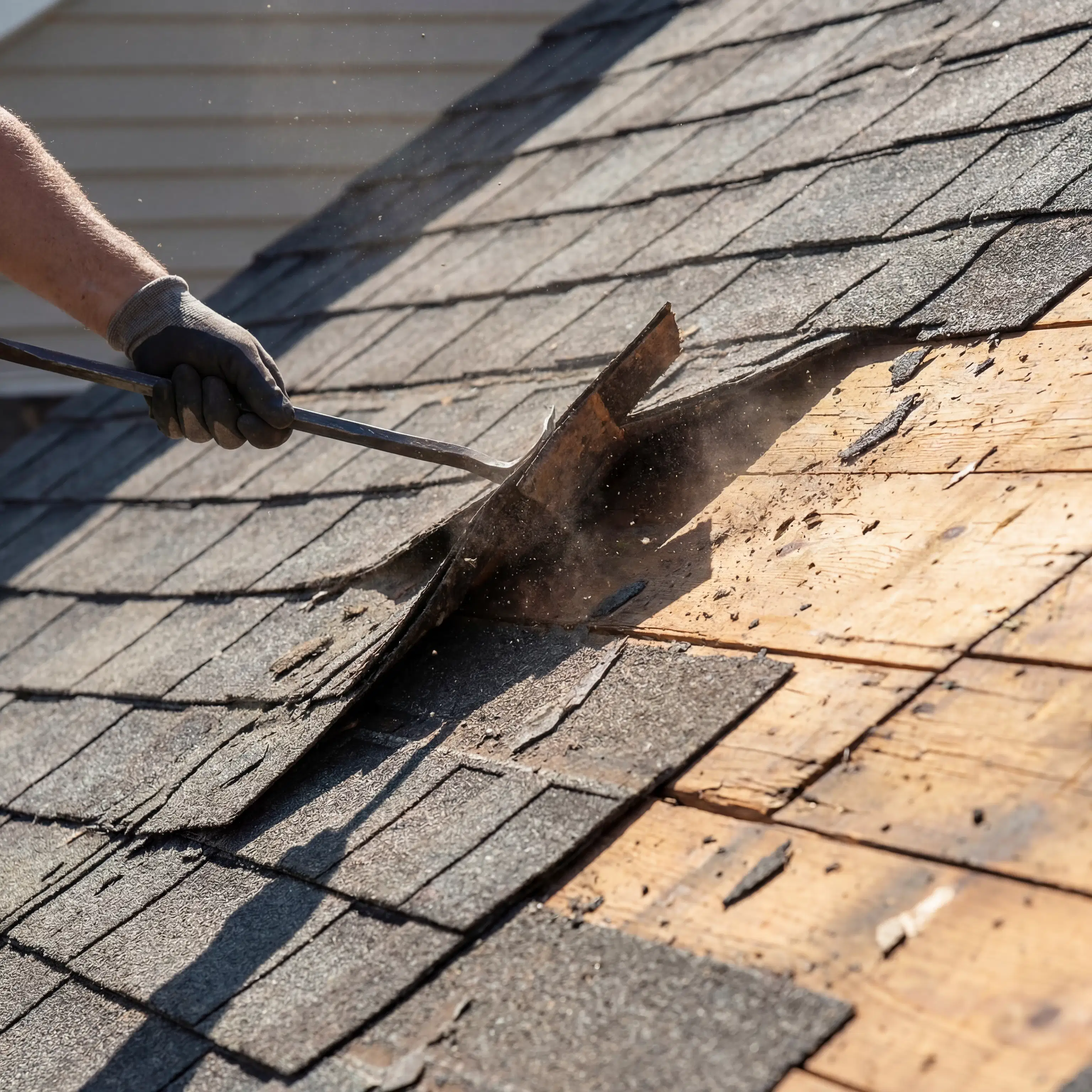
- Curling or Clawing Shingles: When the edges of your shingles start to curl upwards or the middle starts to pop up, it's a sign of both aging and heat damage. These curled shingles are highly susceptible to being torn off by wind, leaving your roof's underlayment exposed.
- Cracked or Missing Shingles: A few missing shingles after a severe storm might be fixable, but widespread cracking or numerous bald patches are a different story. This indicates systemic failure and means your roof is no longer a continuous, water-shedding barrier. This is especially critical to check for after a hail storm.
- Excessive Granule Loss: Those sand-like granules on your asphalt shingles protect them from the sun's damaging UV rays. If you see large amounts of these granules in your gutters or downspouts, it means your shingles are losing their protective layer and are nearing the end of their life.
3. Clues from Inside Your Attic and Home
Sometimes, the most serious signs of roof failure aren't on the roof itself, but inside your home. If you can, a safe trip to your attic is one of the best ways to assess your roof's integrity.
Look for any signs of water stains or streaks on the ceiling or walls. A leak that has reached your living space often points to a more significant, long-standing issue. In the attic, check the underside of the roof deck. Do you see any damp spots, mold, or areas where the wood is sagging? A sagging roof deck is a serious structural concern caused by trapped moisture, indicating the problem has moved beyond the shingles to the very framework of your roof.
Another unmistakable sign is seeing daylight through the roof boards. While it might seem small, any hole is a direct invitation for water, pests, and rot.
4. Widespread Moss or Algae Growth
Dark streaks on your roof are typically caused by airborne algae, which is more of a cosmetic issue. However, if you see thick patches of moss, especially in shaded areas, it could signal a bigger problem. Moss thrives in moist environments and can hold water against the roof surface. Over time, this constant moisture can cause the shingle granules to degrade and can even work its way under the shingles, lifting them and exposing the underlying deck to water during freezing and thawing cycles—a common issue for any Hoosier homeowner.
5. Deciding Between Repair and Replacement
So, when is a simple fix enough? A roof repair is often a great solution for isolated issues on a younger roof, such as replacing a few shingles blown off in a storm. However, if your roof is older and showing multiple signs of wear—like widespread curling, granule loss, and small leaks—a full replacement is the more cost-effective and safer long-term solution.
Think of it this way: patching an old, failing roof is like putting a bandage on a deeper wound. It might stop the bleeding for a little while, but it doesn't address the underlying problem. A full residential roof replacement provides a comprehensive, long-lasting solution that protects your entire home, improves energy efficiency, and increases its value.
Your Trusted Partner for a Healthy Roof
Noticing one or more of these signs can be stressful, but you don't have to make this decision alone. At NFL Exteriors, we believe in honesty and integrity, which is why our owner is directly involved in every project to ensure the highest quality control. We provide thorough, honest assessments to help you understand the true condition of your roof.
If you're concerned about the state of your Indianapolis home's roof, let our team of experts provide you with peace of mind. Contact us today for a free, no-obligation inspection and estimate. We're here to protect your home for decades to come.