
Preventing Commercial Roof Drainage Backups
A few inches of standing water can create a much bigger problem than it appears. When leaves, sediment, ice, or roofing debris block a drain, water can spread beneath flashing, overload vulnerable roof areas, and enter a building through seams or penetrations. The result may include damaged insulation, stained ceilings, interrupted operations, and expensive emergency work.
For facility owners and property managers around Fishers, seasonal storms and falling leaves make drainage maintenance especially important. This guide explains the warning signs of a backup, how to approach clearing commercial flat roof drainage systems, and what belongs on a commercial box gutter inspection checklist. It also covers when to call a qualified roofing professional rather than putting employees at risk.
Why Commercial Roof Drainage Backs Up
Low-slope roofs are designed to move water through internal drains, scuppers, gutters, and downspouts. They are not necessarily meant to look completely dry immediately after rainfall, but water should steadily move toward the drainage system. When that path is restricted, ponding water can remain long enough to accelerate membrane deterioration.
Common causes include:
- Leaves, twigs, seed pods, and windblown trash covering drain strainers
- Roofing granules, sediment, or loose repair materials collecting in low areas
- Crushed, disconnected, or clogged downspouts
- Deteriorated sealant or open seams inside box gutters
- Improper roof slope or insulation compression that creates low spots
- Snow and ice blocking drainage openings during freeze-thaw cycles
- HVAC work, rooftop construction, or neglected equipment leaving debris behind
Water is heavy—approximately 5.2 pounds per square foot for every inch of depth. That makes chronic ponding more than a leak concern; it can also place unnecessary stress on the roof assembly. Scheduled commercial roofing inspections and maintenance help identify restricted drainage, aging membrane details, and structural concerns before the next downpour exposes them.
Signs of Commercial Roof Drain Clogs
A backup does not always announce itself with an obvious ceiling leak. Watch for these early signs after rainfall:
- Water remains around a drain for more than 24–48 hours
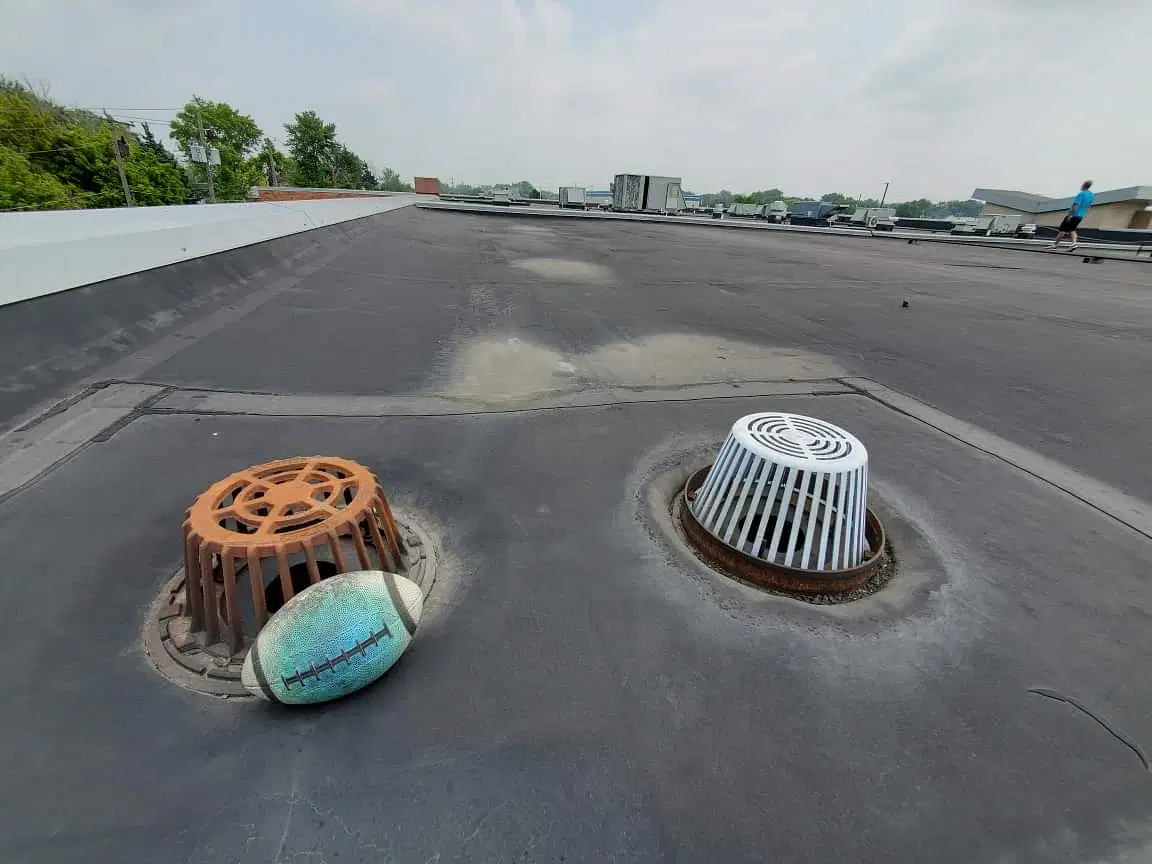
- Debris forms a ring around the drain basket or scupper
- Water lines, algae, or dark staining appear on the membrane
- Gutters overflow even though the downspout outlet releases little water
- Interior ceiling tiles become stained, damp, or musty
- Water drips near walls, columns, skylights, or rooftop penetrations
- The roof membrane wrinkles, blisters, or feels unusually soft underfoot
- Ice repeatedly forms around the same drainage area in winter
Document the location and take photos from a safe position. Note when the issue appeared, how long water remained, and whether recent HVAC or construction work occurred on the roof. This information can help a contractor distinguish a simple surface obstruction from a damaged drain connection, saturated insulation, or poor roof slope.
Modern inspections may use drones and digital imagery to assess broad roof areas quickly while reducing unnecessary foot traffic. These tools are useful, but they do not replace hands-on evaluation when moisture beneath the membrane or a blocked drainpipe is suspected.
A Practical Drain and Box Gutter Inspection Checklist
Drainage should be checked at least twice a year—typically in spring and after most leaves have fallen—and after major wind, hail, or rain events. NFL Exteriors LLC generally recommends annual roof inspections as a baseline for catching problems early; commercial roofs with nearby trees, frequent rooftop activity, or a history of ponding may need more frequent attention.
Roof drains and scuppers
- Confirm strainers and drain baskets are present, secure, and undamaged.
- Remove loose surface debris without pushing it into the drain line.
- Look for splits, open seams, punctures, or failed sealant around drain flashing.
- Check for sediment rings or staining that indicate recurring ponding.
- Verify scuppers are open and properly connected to conductor heads or downspouts.
- Confirm overflow drains are unobstructed; they are a backup, not a substitute for primary drainage.
Commercial box gutters
- Clear leaves and sediment from the full gutter channel.
- Inspect joints, end caps, seams, and lining materials for cracks or separation.
- Look for rust, corrosion, loose fasteners, or sagging sections.
- Check that water flows toward outlets instead of collecting between them.
- Examine the wall and roof edges below for staining, peeling coatings, or masonry damage.
- Confirm downspouts are firmly attached and discharge away from entrances and foundations.
Because gutters operate as part of the entire roof system, damaged or undersized components should be evaluated rather than repeatedly patched. NFL Exteriors LLC provides professional gutter services when drainage components need repair or replacement.
Never send an untrained employee onto a wet, icy, or unprotected roof. Commercial roof access, ladder use, and drain maintenance can involve serious fall and electrical hazards. Qualified professionals should follow applicable safety requirements and use appropriate personal fall-protection equipment.

What to Do When Water Is Already Backing Up
If water is entering the building, protect people and operations first. Keep occupants away from wet ceilings, move inventory and electronics when it is safe to do so, place containers beneath active drips, and avoid electrical fixtures near the leak. Do not puncture a ceiling bulge unless directed by a qualified professional; trapped water and compromised materials can fall suddenly.
A roofer may remove accessible debris, test drainage flow, inspect membrane seams, and trace moisture around drains and penetrations. If the drainpipe itself is blocked, a plumber may also be needed. Interior damage does not always sit directly below the exterior opening because water can travel along decking, insulation, or structural members.
For sudden leaks, NFL Exteriors LLC also offers emergency roof repairs. Save photos, maintenance records, invoices, and weather information in case an insurance claim becomes necessary. Coverage depends on the policy and cause of loss: abrupt storm damage may be covered, while deterioration or neglected maintenance commonly is not.
Make Drainage Maintenance Part of Roof Management
The most effective prevention plan is straightforward: inspect drainage regularly, remove debris before storm season, document recurring ponding, and address damaged flashing or gutters promptly. Detailed records also help owners budget accurately and evaluate whether repeated repairs are still cost-effective.
NFL Exteriors LLC brings honesty, integrity, punctuality, and direct owner involvement to its work. To schedule an evaluation for commercial roofing, gutters, repairs, or emergency service across Central Indiana, contact NFL Exteriors LLC. A professional inspection can determine whether the solution is routine cleaning, targeted repair, drainage improvement, or a broader roof replacement plan.